



The Middle East is no longer just importing culture; it is actively shaping global artistic discourse, with Dubai and Abu Dhabi leading a vibrant new creative economy.
DUBAI — For centuries, the art world’s compass pointed firmly West, towards the galleries of Paris, London, and New York. The Middle East, if mentioned at all, was often viewed through the lens of ancient artifacts or traditional crafts. Today, that perception is being dramatically rewritten. A profound renaissance of Arab contemporary art is underway, with the UAE—particularly Dubai and Abu Dhabi—emerging as its undisputed epicenter.
This isn’t merely about impressive museum architecture; it’s about the cultivation of a robust creative economy that fosters local talent, attracts global artists, and, crucially, defines a modern Arab identity on its own terms.
Alserkal Avenue: The Heartbeat of Dubai’s Art Scene
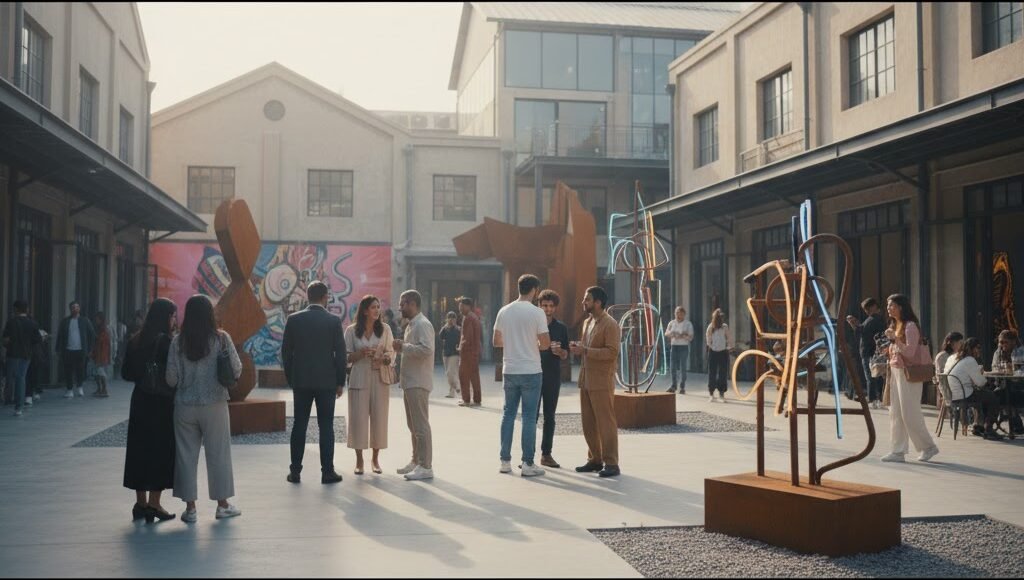
If institutions like the Louvre Abu Dhabi and Jameel Arts Centre provide the gravitas, it is places like Alserkal Avenue in Dubai that offer the heartbeat of the contemporary scene. What began as an industrial zone has morphed into a sprawling cultural district, housing over 70 art galleries, performance spaces, design studios, and culinary concepts.
Alserkal has become a crucial incubator for emerging Emirati and regional artists, providing spaces for experimentation and critical dialogue. Its regular exhibitions, public art initiatives, and engaging programming draw a diverse crowd, from international collectors to local students, making art accessible and vibrant. This organic growth stands in stark contrast to the top-down cultural initiatives, proving that a thriving art scene requires both institutional support and grassroots energy.
Beyond Oil: Exporting Culture and Identity
The art boom is a strategic extension of the UAE’s soft power. By investing in cultural infrastructure and nurturing local artists, the nation is asserting its voice in the global cultural dialogue. The works emerging from the region explore themes of identity, modernity, tradition, and global change—often challenging preconceived notions of Arab societies.
International art fairs like Art Dubai have cemented the city’s position on the global circuit, attracting galleries, curators, and collectors from around the world. These platforms not only facilitate commercial transactions but also foster cross-cultural exchange and elevate regional artists onto the global stage. Auction houses now regularly feature sections dedicated to Middle Eastern and Islamic art, with prices for contemporary works soaring, indicating a sustained and serious international interest.
The New Patronage: Bridging Tradition and Future
What makes this renaissance particularly powerful is the unique blend of traditional patronage and forward-thinking vision. While government bodies fund major museums and initiatives, private collectors and family offices are increasingly investing in emerging artists, building significant collections that are both commercially valuable and culturally important.
This symbiotic relationship is crucial for building a sustainable art ecosystem. It ensures that while the grand institutions preserve heritage, the independent galleries and artists push the boundaries of contemporary expression, ensuring that the Middle East continues to contribute a fresh, dynamic perspective to the global art canvas.