







As Foreign Minister Wang Yi touches down in Abu Dhabi, the conversation has moved beyond crude oil. The new era of trade is defined by LNG, data sovereignty, and the quiet, calculated rise of the petro-yuan.
ABU DHABI — When Chinese Foreign Minister Wang Yi landed at Al Bateen Executive Airport this morning to kick off his five-day tour of the Middle East, the optics were standard, but the agenda was anything but.
- As Foreign Minister Wang Yi touches down in Abu Dhabi, the conversation has moved beyond crude oil. The new era of trade is defined by LNG, data sovereignty, and the quiet, calculated rise of the petro-yuan.
- From “Buyer” to “Partner”
- The Petro-Yuan: Evolution, Not Revolution
- The “Green” Belt and Road
- The Geopolitical Balancing Act
- Investment Outlook: 2026
For decades, visits from major power brokers to the Gulf were defined by security guarantees and defense contracts. But the dossier on the table in Abu Dhabi today is different. It is thick with “Energy 2.0” agreements: Liquefied Natural Gas (LNG) offtakes, green hydrogen joint ventures, and, most critically, the financial infrastructure to pay for it all.
As the US grapples with domestic transitions, Beijing is cementing its role not just as the UAE’s largest customer, but as its essential industrial partner. Here is a market analysis of what this week’s meetings mean for the region’s economic future.
From “Buyer” to “Partner”
The foundation of this visit was laid earlier this year. In April 2025, ADNOC signed landmark LNG supply agreements with Chinese giants ENN, CNOOC, and Zhenhua Oil. Those deals were the appetizer.
What is being discussed this week is the main course: Downstream Integration.
Beijing is no longer content with simply buying crude. The new strategy, dubbed “Integrated Energy Security,” involves Chinese state-owned enterprises (SOEs) taking equity stakes in UAE production facilities, while inviting UAE entities to invest in China’s massive petrochemical complexes.
“The logic is simple,” notes Dr. Faisal Al-Ameri, a senior energy economist at the Gulf Research Center. “China is securing the molecule from the wellhead to the plastic factory. For the UAE, this guarantees a ‘forever customer’ in an era of demand uncertainty.”
The Petro-Yuan: Evolution, Not Revolution
Perhaps no topic generates more breathless headlines—and more misunderstood analysis—than the “Petro-yuan.”


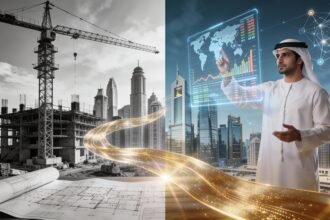
Rumors that the UAE will switch entirely to Yuan for oil payments are overstated. The Dirham’s peg to the US Dollar remains the bedrock of national monetary policy. However, what we are seeing in December 2025 is the normalization of the Yuan as a hedging currency.
Market sources indicate that specific tranches of the April LNG deals are being settled via the Cross-Border Interbank Payment System (CIPS), China’s alternative to SWIFT. This is not a revolution; it is a “sandbox” experiment. By settling 5-10% of trade in Yuan, both nations are building the plumbing for a post-dollar option, should geopolitical shocks ever necessitate it.
For traders, the signal is clear: The monopoly of the Petrodollar is over. We are entering a duopoly, where the Dollar reigns supreme, but the Yuan is a valid, active alternative for bilateral trade.
The “Green” Belt and Road
While the West focuses on tariffs, China is focusing on turbines. A key pillar of Wang Yi’s agenda is the integration of the UAE’s “Net Zero 2050” goals with China’s green technology manufacturing.
The UAE is aggressively expanding its solar capacity, and Chinese firms—who currently control over 80% of the global solar supply chain—are the primary contractors. We expect announcements this week regarding a joint “Green Hydrogen Corridor,” likely leveraging the ports of Khalifa and Shanghai to create a dedicated shipping route for clean ammonia.
This aligns perfectly with the UAE’s desire to move up the value chain. Instead of exporting raw energy, the UAE wants to export “green products” made with that energy—and Chinese technology is the most cost-effective way to build the factories to do it.
The Geopolitical Balancing Act
For the UAE, this deepening tie with Beijing is a masterclass in “Strategic Autonomy.”
Abu Dhabi is not pivotting away from Washington; it is widening its portfolio. By maintaining strong security ties with the US while deepening economic integration with China, the UAE ensures it is indispensable to both superpowers.
However, friction points remain. The US has expressed concerns over Chinese AI and digital infrastructure permeating the Gulf’s energy grids. It is notable that while energy deals are flowing freely, high-end chip and AI collaboration has slowed, likely due to quiet pressure from Western allies.
Investment Outlook: 2026
For investors, the “China-UAE Axis” offers specific opportunities:
- Logistics & Ports: Expect heavy volume growth between Jebel Ali/Khalifa Port and the Greater Bay Area in China.
- Industrial Real Estate: Chinese manufacturing firms are increasingly looking for “near-shoring” hubs in the UAE to bypass tariffs on goods destined for Europe/Africa.
- Commodities: The “Petro-yuan” experiment will likely expand to other commodities, potentially Gold and Aluminum, by mid-2026.
As Wang Yi’s motorcade moves through Abu Dhabi, the message to the markets is stark: The Eastward shift is no longer a forecast. It is the baseline.
Video Analysis: For a deeper visual understanding of the LNG agreements that set the stage for this visit, this report covers the specific deals signed earlier in 2025. China Signs Landmark LNG Agreements with ADNOC
This video provides essential context on the April 2025 deals between ADNOC and Chinese firms, which are the direct precursors to the diplomatic talks analyzed in this article.